Home Renovations Guardamar del Segura: Complete Guide
Introduction
Planning home renovations Guardamar del Segura means understanding the specific challenges of coastal properties, community regulations and the practical realities of older Spanish construction. Whether you own a beachfront flat near Playa de la Roqueta or a townhouse inland, bathroom and wet-room projects in this area require careful preparation, the right materials and realistic timelines. This guide walks you through every stage of a typical renovation, from initial planning to final handover, drawing on years of hands-on experience in Guardamar and the surrounding Costa Blanca towns.
Why Bathroom Renovations Are Common in Guardamar del Segura
Guardamar del Segura sits between the salt lakes and the Mediterranean, which creates a humid, salty microclimate. Many properties were built in the 1980s and 1990s with basic finishes, single-glazed windows and minimal waterproofing. Over time, grout crumbles, silicone seals fail, and tiles lift as moisture works its way behind the surface.
Typical Problems in Guardamar Homes
- Hard water and limescale: The municipal supply leaves heavy calcium deposits on taps, shower screens and inside pipe fittings. Thermostatic cartridges clog faster here than in softer-water regions.
- Humidity and poor ventilation: Older flats often have small, inward-opening windows and no mechanical extract. Condensation pools on tiles, leading to black mould along grout lines and silicone edges.
- Coastal salt air: Metal fittings corrode quickly. Chrome-plated brass taps pit and stain; steel shower trays rust through at the drain.
- Old galvanised-steel pipes: Pre-2000 buildings frequently have galvanised supply lines that rust from the inside, reducing flow and discolouring water. Replacing these is essential during a full renovation.
- Community-of-owners rules: Many urbanisations require written permission before starting work, restrict noisy tasks to weekday mornings, and insist on proper waste disposal. Ignoring these rules can result in fines or forced停工.
Planning Your Home Renovation in Guardamar del Segura
Setting a Realistic Budget
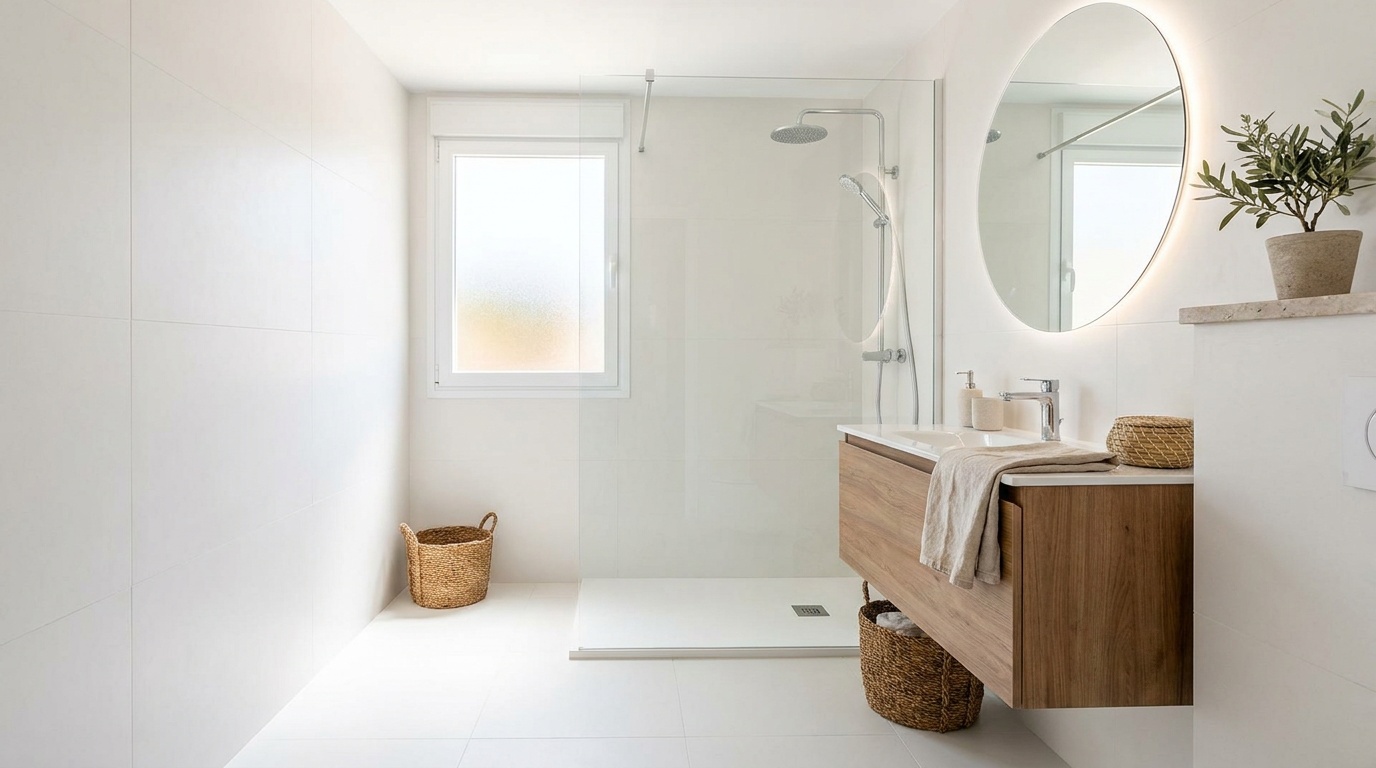
A complete bathroom renovation in Guardamar typically ranges from €4,000 to €10,000, depending on size, materials and scope. A small en-suite with budget porcelain tiles, a basic shower tray and standard chrome fittings might come in around €4,500–€5,500. A larger family bathroom with microcement walls, a flush-to-floor shower tray, thermostatic shower system and wall-hung toilet can reach €8,000–€10,000 or more.
What affects the price:
- Plumbing changes: Moving the toilet or relocating the shower adds labour and materials. Expect an extra €400–€800 if you need to break the floor slab and re-route drains.
- Electrical upgrades: Adding downlights, an extractor fan or underfloor heating means new circuits and possibly a consumer-unit upgrade. Budget €300–€600 for a typical bathroom.
- Waterproofing: Coastal humidity demands tanking membrane on walls and floors. Good-quality liquid membrane costs around €15–€20 per square metre in materials alone.
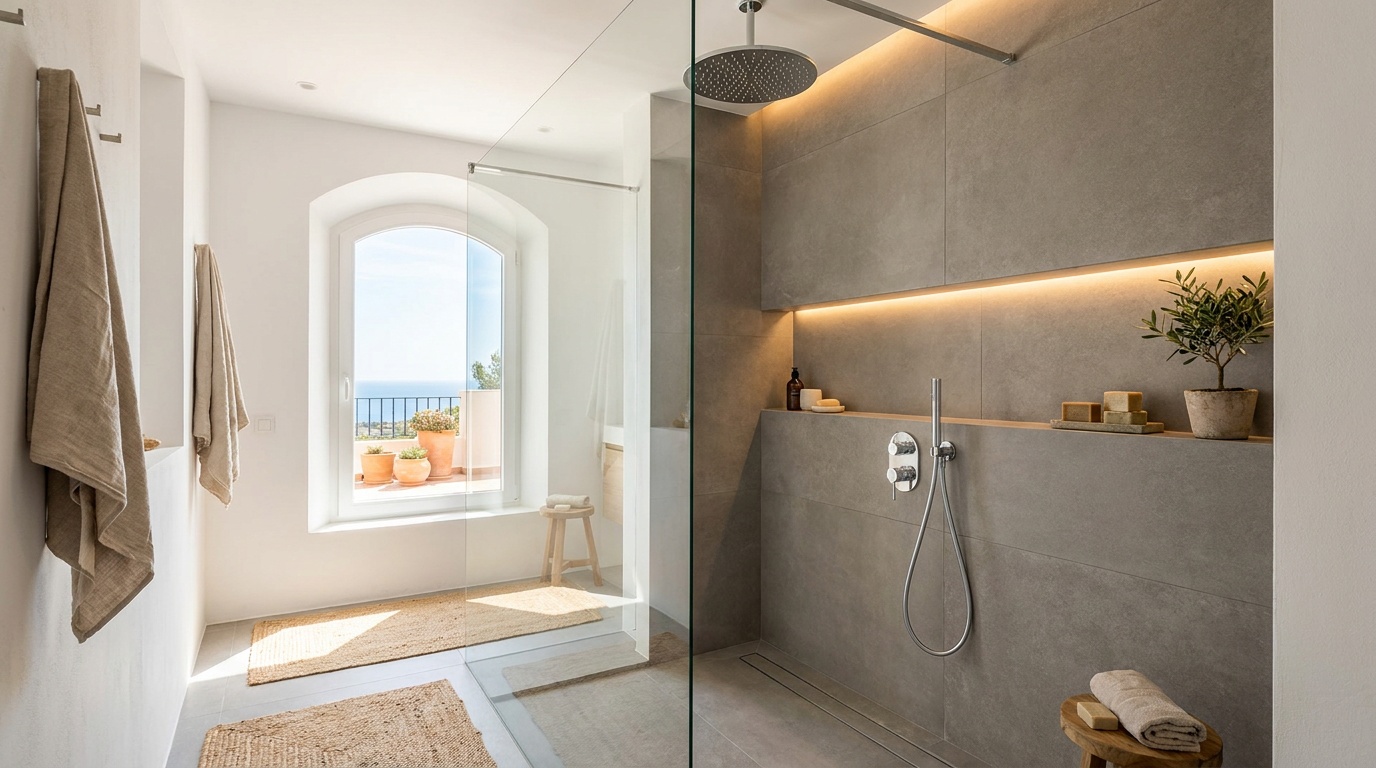
- Tiles versus microcement: Porcelain tiles (€20–€40/m² for mid-range quality) are durable and easy to clean. Microcement (€60–€100/m² installed) offers seamless, modern finishes but requires skilled application and regular sealing.
- Fixtures and fittings: A thermostatic shower valve costs €150–€400; a basic single-lever mixer €60–€120. Wall-hung toilets with concealed cisterns add €200–€300 over floor-standing models.
Permits and Paperwork
Most bathroom renovations in Guardamar fall under obra menor (minor works). You typically need a declaración responsable from the town hall, which costs around €100–€200 and takes a few days to process. If you're changing the layout significantly—moving drains, knocking through walls—you may need a full licencia de obra menor, which involves submitting plans and waiting two to four weeks.
Important: These rules change, and fees vary. Always confirm current requirements with Guardamar del Segura town hall or ask your contractor to handle it. Community statutes may also require you to notify the administrador and provide proof of insurance before starting.
Choosing the Right Time
Summer in Guardamar is hot, and many contractors are busy with holiday-home refurbishments. Spring (March–May) and autumn (September–November) offer milder weather, shorter lead times and easier ventilation during drying stages. Winter works are possible but slower: adhesives and grout cure more slowly in January and February, adding a day or two to the schedule.
Free visit and quote, fixed price in writing and a guarantee on the works.
Step-by-Step: A Typical Bathroom Renovation
1. Initial Visit and Quote
A professional contractor will visit your home, measure the space, check the existing plumbing and electrics, and discuss your priorities. Companies such as Reformas Baño Alicante offer a free, no-obligation visit and provide a detailed, fixed-price quote that breaks down labour, materials and timelines. This transparency helps you compare offers and avoid surprise costs later.
During the visit, ask about:
- Whether old pipes need replacing
- How the contractor will protect floors and furniture in adjoining rooms
- Waste removal and skip hire
- Guarantee terms (typically one to two years on workmanship, manufacturer warranties on fittings)
2. Stripping Out (Day 1)
The crew removes the old suite, tiles, and any damaged plasterboard or render. They cut away silicone, unscrew the toilet and basin, disconnect the shower tray, and carefully chip tiles off the walls. In older Guardamar flats, the render beneath tiles is often weak and crumbly; expect to re-plaster or over-board with cement board.
Waste goes into rubble sacks or a small skip. A typical bathroom generates 30–50 sacks of rubble. Check that your community allows skip placement; some urbanisations require a permit or insist on bagged waste collected by the town service.
3. First Fix: Plumbing and Electrics (Days 2–3)
The plumber installs new supply pipes (cross-linked polyethylene, or PEX, is now standard—flexible, corrosion-proof and easy to route) and waste pipes. If you're replacing galvanised steel, this stage takes longer: the plumber must chase walls, fit new stop valves, and pressure-test the system.
The electrician runs cables for lights, extractor fan, shaver socket and any underfloor heating mats. All circuits must be RCD-protected. In older buildings, the existing consumer unit may lack spare ways; upgrading it adds cost but improves safety.
4. Waterproofing and Boarding (Day 4)
Walls are straightened with render or cement board (12 mm Wedi or similar), then coated with liquid tanking membrane. Pay special attention to corners, pipe penetrations and the shower area—these are where leaks start. The membrane should lap onto the floor and cure for 24 hours before tiling.
Floors get a self-levelling screed if needed, then the same membrane treatment. In Guardamar's humid climate, skipping or skimping on waterproofing is the single biggest mistake; moisture will wick through grout and destroy your renovation within a year.
5. Tiling (Days 5–7)
Porcelain tiles go up on walls and down on floors. For walls, use a flexible, water-resistant adhesive (C2S1 or C2S2 class); for floors, a thicker-bed adhesive with good grab. Large-format tiles (60×30 cm or 60×60 cm) are popular—they look modern and have fewer grout lines to clean—but require a perfectly flat substrate and skilled laying.
Grout choice matters on the coast. Standard cement grout absorbs water and stains; epoxy grout costs more (around €30–€40 per kilo versus €10–€15 for cement) but stays cleaner and resists mould. In shower enclosures, always use epoxy or a high-quality flexible grout, and seal all corners with silicone, not grout.
Allow 24–48 hours for adhesive to cure before grouting, then another 24 hours before walking on the floor or fitting the suite.
6. Second Fix: Installing the Suite (Days 8–9)
The toilet, basin, shower tray and taps go in. Wall-hung toilets require a sturdy frame (Geberit or similar) hidden inside a stud wall or boxing; the frame must be level and secure, because it carries the entire load. The concealed cistern is fitted, pipework connected, and the wall tiled or plastered over, leaving only the flush plate visible.
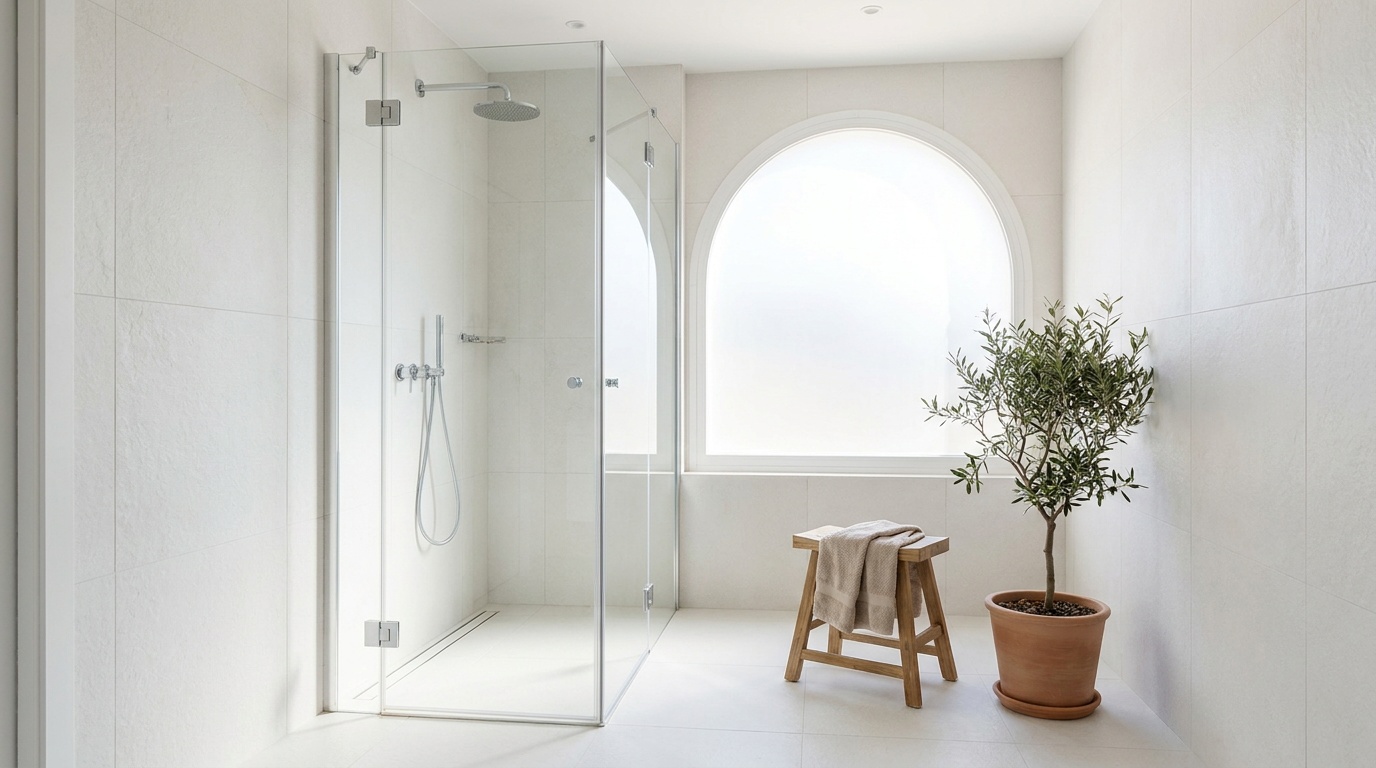
Shower trays come in resin, acrylic or ceramic. Resin trays (often called platos de ducha in Spanish suppliers) are popular: lightweight, anti-slip, available in custom sizes and easy to cut to fit awkward spaces. A flush-to-floor tray requires a recessed waste and careful levelling; if the floor slab is thin, you may need to build up a low plinth instead.
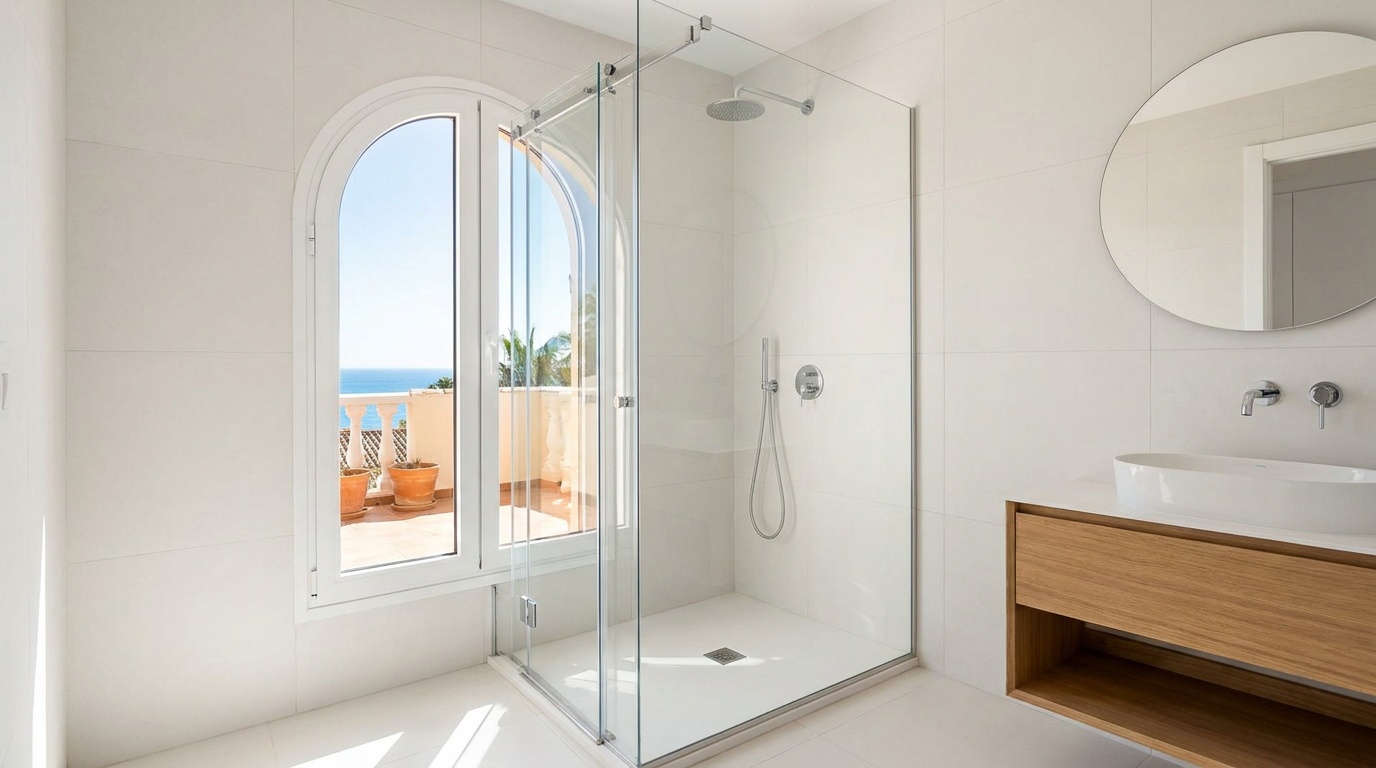
Fit the shower screen last. Toughened glass (6 or 8 mm) with minimal frame is the modern standard. Check that the wall is plumb; even a 5 mm bow will leave gaps that let water through.
7. Finishing Touches (Day 10)
Silicone all joints between tiles and fittings, fit the extractor fan grille, hang mirrors and accessories, and apply any final paint. The electrician connects lights and tests all circuits. The plumber checks for leaks, adjusts tap flow and explains how to operate thermostatic controls.
A final clean removes dust, grout haze and protective film from fittings. The contractor should leave the bathroom ready to use, with all packaging and waste removed.
Materials That Work Best in Guardamar's Climate
Porcelain Tiles
Porcelain is denser and less porous than ceramic, making it ideal for wet areas and coastal humidity. Rectified edges allow tight grout lines (2 mm), which look sleek and collect less dirt. Expect to pay €20–€40 per square metre for good Spanish or Italian porcelain.
Microcement
Microcement creates seamless, joint-free surfaces on walls and floors. It's water-resistant once sealed, easy to clean, and available in many colours. However, it requires expert troweling—uneven application shows as patches and streaks—and must be resealed every one to two years to maintain water resistance. In Guardamar's salty air, cheaper microcement can discolour or flake; insist on a reputable brand and a skilled applicator.
Shower Trays and Screens
Resin trays with anti-slip texture (class 2 or 3) are safer than glossy ceramic. White is timeless, but grey and black are increasingly popular. Pair the tray with a toughened-glass screen; avoid plastic or framed screens, which trap water and soap scum.
Taps and Valves
Thermostatic shower valves maintain constant temperature even when someone flushes a toilet elsewhere in the home. They cost more than manual mixers but are worth it for safety and comfort. Choose models with ceramic cartridges and replaceable filters to combat limescale.
For basins, wall-mounted taps look elegant and make counter cleaning easier, but they require chasing the wall and precise pipe placement. Deck-mounted single-lever mixers are simpler to install and easier to service.
Ventilation
Mechanical extract is essential. A basic axial fan (€30–€60) shifts 80–100 m³/hour; a centrifugal fan (€80–€150) is quieter and more powerful. Fit a humidistat or timer overrun so the fan keeps running after you leave, expelling residual moisture. Duct the fan to an exterior wall or roof vent—never into a ceiling void, where damp air will condense and rot timbers.
Common Mistakes and How to Avoid Them
Skipping Waterproofing
It's invisible once tiled, so some budget contractors omit it. Within months, water seeps through to the floor below, damaging ceilings and causing disputes with neighbours. Always insist on tanking membrane and ask to see photos of it applied before tiling starts.
Undersizing the Extractor
A tiny fan in a large bathroom won't shift enough air. Calculate the room volume (length × width × height in metres) and choose a fan rated for at least six air changes per hour. For a 2 m × 2 m × 2.5 m bathroom (10 m³), you need a minimum 60 m³/hour fan; 100 m³/hour is better.
Ignoring Community Rules
Starting work without notifying the administrador or working on Sunday afternoons can result in fines (typically €300–€600) and bad relations with neighbours. Check the statutes, submit your paperwork, and stick to permitted hours (usually 08:00–14:00 and 16:00–20:00 on weekdays).
Choosing Cheap Silicone
Bargain-brand silicone yellows, cracks and peels within months in Guardamar's humidity. Use a high-quality sanitary silicone with fungicide (brands such as Soudal, Quilosa or Mapei cost €5–€8 per tube) and replace it every couple of years as part of routine maintenance.
Rushing the Drying Stages
Adhesive, grout, render and silicone all need time to cure. Tiling over damp render, grouting before adhesive sets, or using the shower before silicone cures leads to failures. A good contractor builds buffer days into the schedule; a ten-day job should never be promised in five.
Working with a Local Contractor
Choosing a contractor who knows Guardamar and the surrounding Costa Blanca towns makes a real difference. They understand local building methods, have relationships with suppliers in Torrevieja and Alicante, and know which materials stand up to coastal conditions.
Reformas Baño Alicante, for example, offers a free initial visit throughout Guardamar del Segura, Rojales, Ciudad Quesada and nearby areas. They provide a fixed-price quote that covers all labour, materials and waste removal, so you know exactly what you'll pay before work starts. That transparency and local experience help avoid the surprises and cost overruns that plague many renovations.
When comparing quotes, look beyond the headline price. Ask what's included: Is waterproofing specified? What brand of tiles and fittings? Who handles permits and skip hire? A slightly higher quote from an experienced, insured contractor is almost always better value than a rock-bottom price from someone who cuts corners.
Preparing Your Home for Renovation
A bathroom renovation is messy and disruptive. A little preparation makes life easier:
- Clear the bathroom completely: Remove toiletries, towels, cabinets and any loose fittings. The crew needs an empty space.
- Protect adjoining rooms: Lay dust sheets in the hallway and tape plastic over doorways. Dust will escape, but you can minimise it.
- Arrange alternative facilities: You'll be without a working bathroom for seven to ten days. If you have a second bathroom, great; otherwise, plan to use a neighbour's, a gym, or a portable camping toilet.
- Notify neighbours: A courtesy note or quick chat explains the noise and duration, reducing complaints.
- Check parking and access: If your urbanisation has restricted entry or no nearby parking, arrange visitor permits or a loading bay for the skip and materials delivery.
After the Renovation: Maintenance Tips
Daily Care
- Squeegee shower walls and screen after every use to prevent limescale build-up.
- Run the extractor fan for at least 15–20 minutes after showering.
- Wipe taps and chrome fittings with a soft cloth to remove water spots.
Monthly Tasks
- Clean grout lines with a pH-neutral tile cleaner. Avoid bleach on coloured grout; it fades the pigment.
- Check silicone seals for cracks or mould. Replace any that look tired.
- Descale the shower head by soaking it in white vinegar overnight.
Annual Checks
- Inspect under the basin and behind the toilet for slow leaks or corrosion.
- Re-seal microcement surfaces if you have them, following the manufacturer's instructions.
- Service thermostatic valves: Remove and clean the cartridge filters. In Guardamar's hard water, this can double the valve's lifespan.
By staying on top of these small tasks, your renovated bathroom will look and perform well for ten years or more, even in the challenging coastal environment.
Final Thoughts on Home Renovations Guardamar del Segura
A well-planned bathroom renovation transforms daily life, adds value to your property, and solves the moisture, limescale and ageing-infrastructure problems common in Guardamar del Segura and the wider Costa Blanca. Success depends on realistic budgets, proper waterproofing, quality materials suited to the coastal climate, and a contractor who understands local conditions and regulations.
Take time to plan, ask questions, and insist on transparency at every stage. Whether you're updating a holiday apartment near the marina or renovating a family home inland, the effort you invest in preparation pays off in a bathroom that works beautifully for years to come.
FAQ
How long does a typical bathroom renovation take in Guardamar del Segura?
A complete bathroom renovation usually takes eight to ten working days, from stripping out to final handover. Larger bathrooms, complex plumbing changes or delays in drying stages (common in winter) can extend the timeline to two weeks. Always build in a few buffer days and arrange alternative facilities.
Do I need a permit to renovate a bathroom in Guardamar del Segura?
Most bathroom renovations require a *declaración responsable* (minor works declaration) from the town hall, which costs around €100–€200 and takes a few days to process. If you're moving drains or structural walls, you may need a full *licencia de obra menor*. Always confirm current rules with the town hall or your contractor, and check your community statutes for additional requirements.
What are the biggest challenges when renovating bathrooms in Guardamar?
Hard water causes rapid limescale build-up on taps and inside valves. Coastal humidity and salt air demand robust waterproofing and corrosion-resistant fittings. Older properties often have galvanised steel pipes that need replacing, and community-of-owners rules can restrict working hours and require advance notice. Proper planning and local expertise help overcome these issues.
How much does a bathroom renovation cost in Guardamar del Segura?
Expect to pay between €4,000 and €10,000 for a full bathroom renovation, depending on size, materials and scope. A small en-suite with standard fittings and porcelain tiles might cost €4,500–€5,500, while a larger bathroom with microcement, thermostatic shower and wall-hung toilet can reach €8,000–€10,000 or more. Always get a detailed, fixed-price quote before starting work.
Should I use porcelain tiles or microcement in a coastal bathroom?
Porcelain tiles are durable, water-resistant and easy to maintain, making them ideal for Guardamar's humid, salty climate. Microcement offers a seamless, modern look but requires expert application and regular resealing. Both work well if properly installed; choose based on your budget, aesthetic preference and willingness to maintain the finish over time.