Bathroom Remodel Cost Ciudad Quesada Rojales 2025
Introduction
Planning a bathroom renovation in Ciudad Quesada or Rojales means understanding what drives the final bill and how local conditions shape the work. The bathroom remodel cost in Ciudad Quesada and Rojales typically ranges from around €3,500 for a simple refresh to €10,000 or more for a complete transformation, depending on size, materials, layout changes and the age of the property. This guide walks you through the real work sequence, material choices, timelines and the factors that push the price up or down, drawn from years of hands-on experience renovating bathrooms across the Costa Blanca.
What Goes Into the Bathroom Remodel Cost in Ciudad Quesada and Rojales
Every bathroom project is a layered process, and each layer carries its own cost. Breaking down the work helps you see where the money goes and where you can adjust your budget.
Demolition and Preparation
The first step is stripping out the old bathroom: removing tiles, sanitaryware, pipes, electrics and any damaged plasterwork. In Ciudad Quesada and Rojales, many properties date from the 1990s and early 2000s, so you often find thick mortar beds under old ceramic tiles and ageing copper or galvanised steel pipes that need replacing.
Demolition for a standard 4–5 m² bathroom typically takes one to two days and costs between €300 and €600, including waste removal. If the substrate is in poor condition—common in ground-floor flats with rising damp or top-floor apartments with roof leaks—you may need additional rendering or damp-proofing, adding €200–€500.
Plumbing and Electrics
Replacing or rerouting pipes and cables is where hidden costs appear. Older homes in Rojales often have narrow galvanised pipes that restrict flow and are prone to limescale build-up from the hard local water. Upgrading to modern PEX or multilayer pipe adds €400–€800, depending on whether you move the toilet, shower or basin.
Electrical work—new circuits for an extractor fan, heated towel rail, additional sockets and downlights—runs €300–€600. All installations must meet current standards, and any significant changes may require a declaración responsable or obra menor permit from the town hall; check with your contractor or the ayuntamiento to confirm what applies to your project.
Tiling and Waterproofing
Tiles are the largest visible expense. Porcelain tiles are the workhorse choice: durable, water-resistant and available in countless finishes. For walls, large-format 30×60 cm or 30×90 cm tiles are popular because they minimise grout lines and make small bathrooms feel bigger. Floor tiles are usually 30×30 cm or 60×60 cm with a slip-resistant finish.
Material and labour for mid-range porcelain tiles cost roughly €30–€50 per m² installed. A 4 m² bathroom with tiling up to 2 metres on walls (about 16 m² of wall tile) and 4 m² of floor tile totals around 20 m², so budget €600–€1,000 for tiles and fitting. Premium porcelain or natural stone can double that figure.
Waterproofing is non-negotiable, especially in wet zones around the shower. We apply a flexible tanking membrane to walls and floor before tiling, which costs an additional €150–€250 but prevents leaks and protects the structure—critical in multi-storey buildings where a leak can damage neighbours below.
Sanitaryware and Fixtures
Toilet, basin, shower tray or bath, taps and shower fittings make up a significant chunk of the budget. Here's a typical range:
- Wall-hung toilet with concealed cistern: €250–€600 (including frame and flush plate)
- Pedestal or wall-mounted basin: €80–€300
- Shower tray (resin or acrylic, 80×80 cm or 70×140 cm): €150–€400
- Walk-in shower screen (8 mm tempered glass): €200–€500
- Basin mixer tap: €60–€200
- Thermostatic shower valve and rail kit: €150–€400
Wall-hung toilets are increasingly common because they free up floor space and simplify cleaning, but they require a sturdy wall or additional bracing. In older Rojales townhouses with thin partition walls, reinforcement adds €100–€200.
Ventilation and Heating
Poor ventilation is a recurring issue in older flats in Ciudad Quesada, where bathrooms often have small windows or none at all. Humidity from showers lingers, encouraging mould on grout and silicone. Installing a quality extractor fan (preferably with a humidistat that runs automatically) costs €80–€200 including ducting.
If you want underfloor heating—a comfortable upgrade in winter—budget €30–€50 per m² for an electric mat system, plus €150–€250 for the thermostat and installation. Heated towel rails run €100–€300 depending on size and finish.
Finishing Touches and Extras
Mirrors, shelving, towel rails, lighting and accessories round out the job. A large mirror with LED backlighting costs €100–€300; recessed LED downlights are around €20–€40 each installed. Don't overlook silicone sealant and grout: high-quality anti-mould silicone lasts longer in the humid coastal climate and costs only a few euros more.
Typical Bathroom Remodel Cost Scenarios
To make the numbers concrete, here are three common projects based on real work in Ciudad Quesada and Rojales.
Basic Refresh (€3,500–€5,000)
- Scope: Strip and re-tile walls and floor, replace toilet, basin and taps, fit new shower tray and screen, repaint ceiling, install extractor fan.
- Materials: Mid-range porcelain tiles, standard white sanitaryware, chrome taps, acrylic shower tray.
- Timeline: 7–10 working days.
- Typical property: Small apartment bathroom (3–4 m²), no layout changes, plumbing and electrics in reasonable condition.
This level suits landlords refreshing rental properties or homeowners on a tight budget who want a clean, functional result without luxury finishes.
Mid-Range Renovation (€5,500–€8,000)
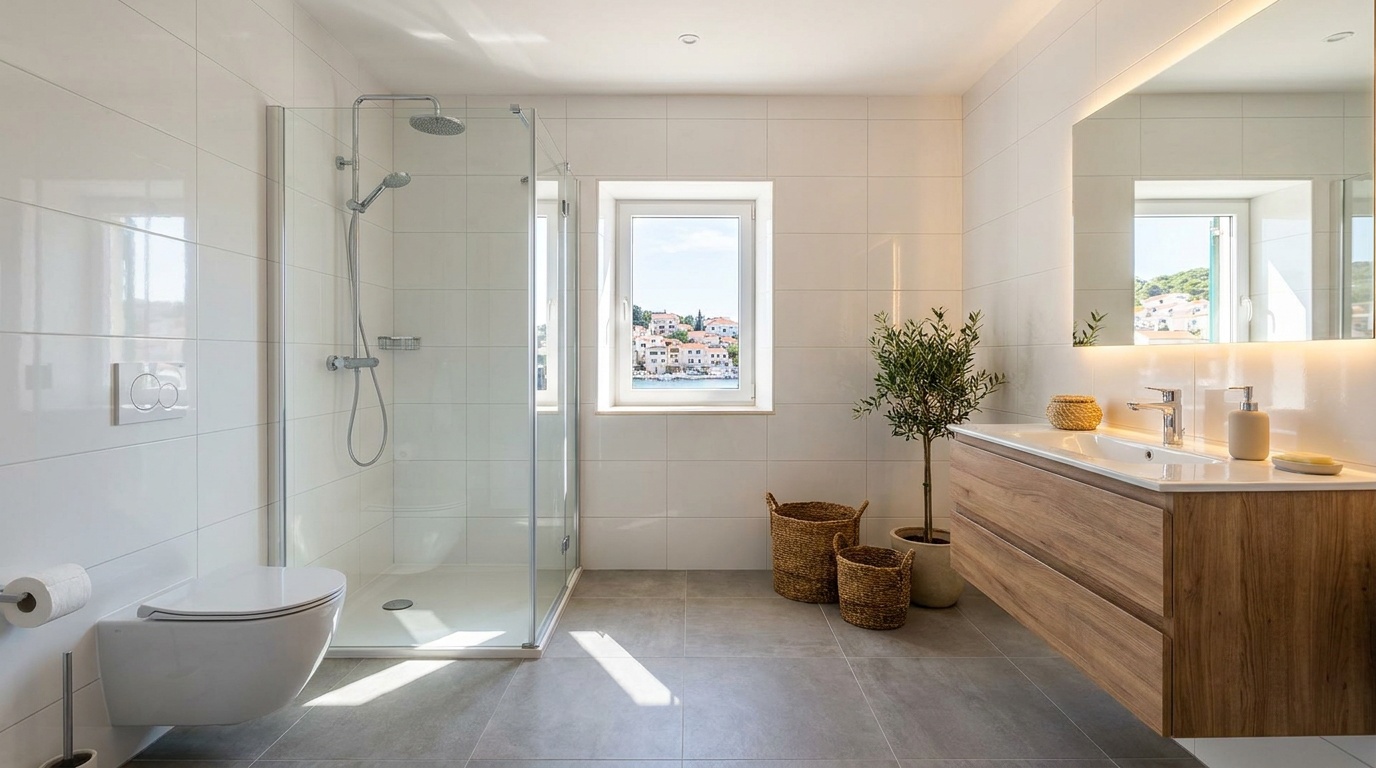
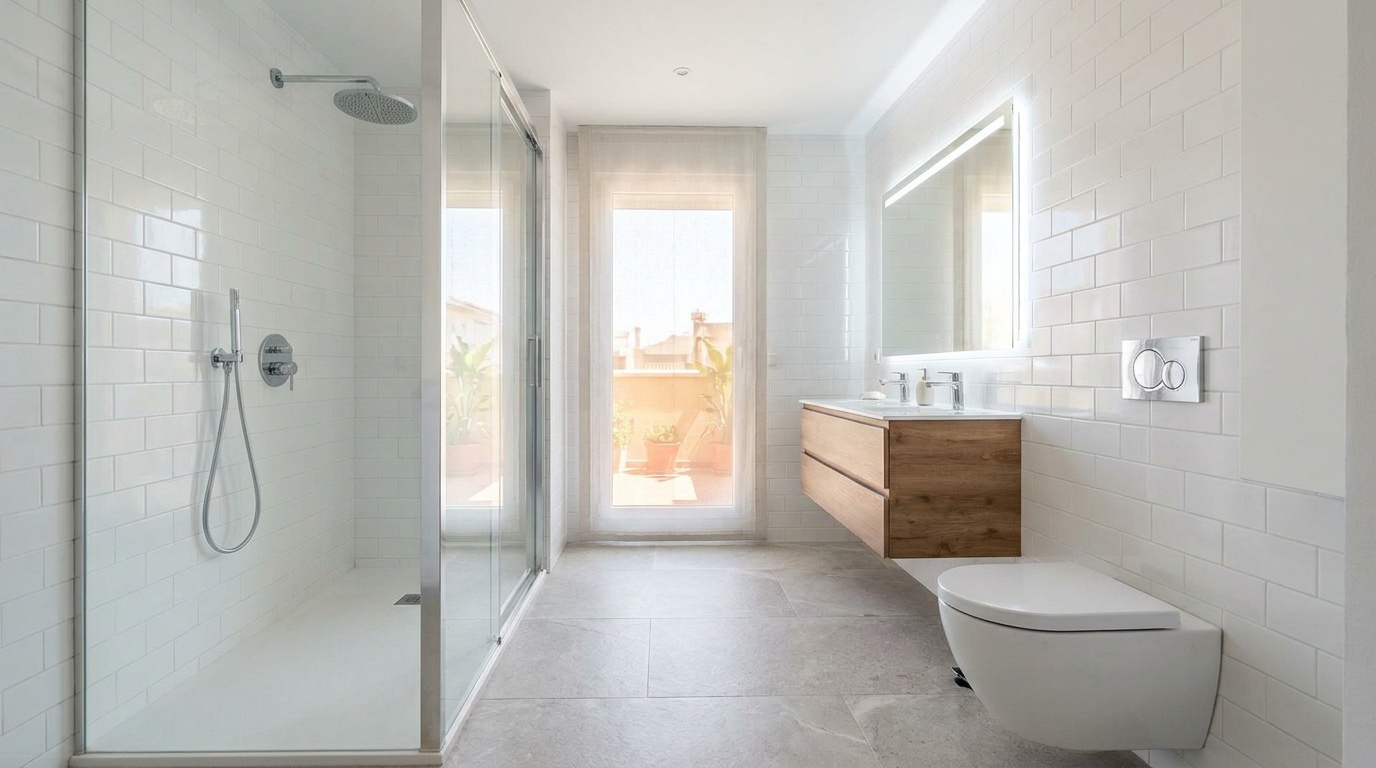
- Scope: Full strip-out, re-plumb and re-wire, tanking, quality porcelain tiles, wall-hung toilet with concealed cistern, new basin and vanity unit, thermostatic shower valve, walk-in glass screen, heated towel rail, LED mirror, extractor fan.
- Materials: Large-format porcelain tiles, branded sanitaryware (Roca, Gala, Ideal Standard), thermostatic shower, chrome or brushed steel finishes.
- Timeline: 10–14 working days.
- Typical property: Standard 4–5 m² bathroom in a townhouse or apartment, minor layout tweaks (moving basin or toilet within the same wall).
This is the sweet spot for most homeowners: a modern, durable bathroom that balances quality and cost.
High-End Transformation (€9,000–€12,000+)
- Scope: Complete reconfiguration, all new plumbing and electrics, underfloor heating, premium porcelain or natural stone, wall-hung sanitaryware, bespoke vanity unit, rainfall shower head and body jets, frameless glass screen, microcement feature wall, custom lighting, anti-limescale water softener.
- Materials: Large-format porcelain imitating marble or concrete, high-end taps (Grohe, Hansgrohe), designer sanitaryware, microcement or Silestone worktop.
- Timeline: 15–20 working days.
- Typical property: Larger bathroom (6+ m²) in a villa or penthouse, significant layout changes, high aesthetic expectations.
At this level, every detail is considered, and finishes are chosen for both looks and longevity.
Free visit and quote, fixed price in writing and a guarantee on the works.
Factors That Change the Price in Ciudad Quesada and Rojales
Several local and project-specific factors push costs up or down. Understanding them helps you plan realistically.
Property Age and Condition
Older properties often hide problems: damp patches, corroded pipes, outdated wiring, uneven floors. A 1990s apartment in Ciudad Quesada may have original copper pipes furred with limescale and a floor that needs levelling compound before tiling. Budget an extra 10–20% contingency for surprises.
Newer builds (post-2010) usually have modern plumbing and electrics, so the work is more straightforward and predictable.
Layout Changes
Moving a toilet, shower or basin to a different wall means extending waste pipes, which is more complex and costly than working with the existing layout. Relocating a toilet can add €300–€600 due to the need for proper fall on the waste pipe and potential floor raising.
If your bathroom is small and awkwardly laid out—common in older Rojales townhouses—sometimes a modest shuffle (swapping toilet and basin positions) makes a big difference without major expense.
Hard Water and Limescale
Water in Ciudad Quesada and Rojales is notoriously hard, leaving white limescale deposits on taps, shower screens and tiles. This doesn't directly increase renovation cost, but it's worth considering:
- Thermostatic shower valves with ceramic cartridges resist limescale better than cheaper mixers.
- Easy-clean glass coatings on shower screens (often an optional extra for €50–€100) repel water and reduce cleaning.
- Inline water softeners or filters (€150–€400 installed) protect your new fixtures and extend their life.
Many clients ask about this after a few months when they see limescale building up again; mentioning it during planning saves frustration.
Community Rules and Permits
If you live in an apartment block or urbanisation with a community of owners, check the statutes before starting. Some communities restrict noisy work to certain hours or require notification. Weekend or evening work, if allowed at all, may incur surcharges.
For permits, a straightforward bathroom renovation (like-for-like replacement, no structural changes) often falls under a declaración responsable or obra menor, which is simpler and cheaper than a full licence. Fees vary by town—Rojales and Orihuela Costa (which administers Ciudad Quesada) have different procedures—so confirm with the ayuntamiento or ask your contractor to handle it. Reformas Baño Alicante, for example, includes permit advice and handling in the initial consultation, so you're not navigating town hall paperwork alone.
Material Choices
Tiles, taps and sanitaryware span a huge price range. Choosing mid-range porcelain instead of natural marble can halve your materials bill without sacrificing durability. Similarly, a quality own-brand thermostatic valve performs nearly as well as a premium German brand but costs €100–€150 less.
That said, skimping on waterproofing, grout or silicone is false economy. These hidden elements protect your investment and prevent expensive water damage.
Labour and Project Management
A well-coordinated team—tiler, plumber, electrician, painter—working to a clear schedule keeps the project on time and on budget. Delays, rework and miscommunication cost money. Experienced local contractors know the quirks of Costa Blanca properties (hard water, coastal humidity, community rules) and plan accordingly.
A fixed-price quote agreed upfront eliminates surprise bills. Many companies, including Reformas Baño Alicante, offer a free on-site visit to assess the space, discuss your needs and provide a detailed written quote, so you know exactly what you're paying for before work begins.
Timeline: How Long Does a Bathroom Renovation Take?
A typical bathroom renovation in Ciudad Quesada or Rojales follows this sequence:
- Day 1–2: Demolition, waste removal, initial plumbing and electrical rough-in.
- Day 3–4: Waterproofing, any necessary rendering or floor levelling.
- Day 5–8: Wall and floor tiling (including drying time for adhesive and grout).
- Day 9–10: Install sanitaryware, shower screen, taps, extractor fan, finish plumbing and electrics.
- Day 11: Silicone sealing, final touches, clean-up.
In practice, a small bathroom takes 7–10 working days; a larger or more complex project can stretch to 15–20 days. Weather rarely affects indoor work, but material deliveries can be delayed, especially if you order bespoke items from mainland Spain or abroad.
Living without a bathroom is inconvenient, so if you have a second WC or can arrange temporary access elsewhere, it eases the disruption.
Common Mistakes and How to Avoid Them
Having seen dozens of renovations, certain pitfalls come up again and again.
Choosing the Cheapest Quote Without Checking Details
A rock-bottom price often means corners cut—thin adhesive beds, no waterproofing membrane, the cheapest tiles that crack within a year. Compare quotes carefully: what's included, what materials, what guarantees. A slightly higher quote from an experienced contractor usually delivers better value.
Ignoring Ventilation
Skipping or undersizing the extractor fan leads to persistent condensation, mould on grout and peeling paint. In coastal areas like Ciudad Quesada, humidity is already high; a bathroom without proper ventilation becomes unpleasant fast. Spend the extra €100 on a good fan with a humidistat—it's a small fraction of the total cost and makes a big difference.
Overlooking Storage
A beautiful new bathroom is less enjoyable if you have nowhere to put towels, toiletries and cleaning supplies. Plan for a vanity unit with drawers, recessed shelves in the shower, or a wall-hung cabinet. Retrofitting storage later is awkward and expensive.
Not Planning for Hard Water
Limescale is a fact of life here. Choose tap finishes that hide water spots (brushed steel or matte black show less than polished chrome), consider a water softener, and use anti-limescale cleaning products regularly. Discuss this with your contractor during planning.
Starting Work Without a Clear Scope
Changing your mind mid-project—deciding you want underfloor heating after the floor is tiled, or moving the toilet after plumbing is roughed in—causes delays and extra costs. Finalise your design, materials and layout before demolition begins. A detailed written quote and plan prevent misunderstandings.
Preparing Your Home for the Renovation
A little preparation makes the work go smoother and protects your property.
- Clear the bathroom completely: Remove all toiletries, towels, cabinets, mirrors and anything hanging on walls.
- Protect adjacent rooms: Dust and noise spread, so close doors, seal gaps with tape if necessary, and cover nearby furniture.
- Arrange access: Make sure the team can park nearby and carry materials and waste in and out. In some urbanisations, you may need to notify security or reserve a parking space.
- Plan temporary facilities: If this is your only bathroom, arrange access to a neighbour's WC or a portable toilet for the duration.
- Communicate with neighbours: Let them know work is happening, especially if you live in an apartment block. A courtesy heads-up prevents complaints.
- Confirm the schedule: Know when the team will arrive each day, when noisy work (demolition, drilling) will happen, and the expected completion date.
Good contractors will walk you through this during the initial visit, answer questions and give you a clear timeline.
Why Local Experience Matters
Renovating bathrooms in Ciudad Quesada and Rojales isn't the same as working in Madrid or Barcelona. The coastal climate, hard water, older building stock and community rules all shape how the job is done. A contractor familiar with the area knows to specify anti-limescale valves, to check community statutes before starting, to allow extra time for waste removal in urbanisations with restricted access, and to source materials locally to avoid delivery delays.
They also understand the permit landscape—what needs a declaración responsable, what the local ayuntamiento requires, and how to navigate the process without holding up the project. This local knowledge saves you time, money and headaches.
Companies like Reformas Baño Alicante, which focus exclusively on bathroom renovations in this area, bring that hands-on familiarity to every project. The free on-site visit and fixed-price quote mean you get a realistic assessment and a clear budget from the start, with no hidden surprises.
Final Thoughts
Understanding the bathroom remodel cost in Ciudad Quesada and Rojales means looking beyond a single headline figure and breaking down the work into its components: demolition, plumbing, electrics, tiling, sanitaryware, ventilation and finishing. Each element has a cost, and each is shaped by the age and condition of your property, the materials you choose, and the local environment.
Budget €3,500–€5,000 for a basic refresh, €5,500–€8,000 for a quality mid-range renovation, and €9,000 upwards for a high-end transformation. Allow 10–15% contingency for older properties, and don't skimp on waterproofing, ventilation or quality materials that resist hard water.
Plan carefully, choose an experienced local contractor, get a detailed written quote, and prepare your home properly. Do that, and you'll have a bathroom that looks great, works reliably and adds real value to your home for years to come.
FAQ
How much does it cost to renovate a small bathroom in Ciudad Quesada?
A small bathroom renovation in Ciudad Quesada typically costs between €3,500 and €6,000, depending on materials and whether you change the layout. This includes demolition, tiling, new sanitaryware, plumbing, electrics and an extractor fan. Older properties may need extra work for damp or outdated pipes, which can add to the cost.
How long does a bathroom renovation take in Rojales?
A standard bathroom renovation in Rojales takes 7–10 working days for a straightforward project and 12–15 days if you're changing the layout or dealing with an older property. This includes demolition, plumbing, tiling, fitting sanitaryware and finishing. Delays can happen if materials are back-ordered or unexpected issues arise.
Do I need a permit to renovate a bathroom in Ciudad Quesada?
Most bathroom renovations require a declaración responsable or obra menor permit from the Orihuela Costa town hall, especially if you're changing plumbing or electrics. The rules and fees vary, so check with the ayuntamiento or ask your contractor to handle it. If you live in a community, notify the administrator before starting work.
What is the best tile for a bathroom in Rojales with hard water?
Porcelain tiles are the best choice for bathrooms in Rojales because they're durable, water-resistant and easy to clean. Large-format tiles (30×60 cm or bigger) minimise grout lines, which reduces limescale build-up. Choose rectified tiles for tight joints and use high-quality anti-mould grout and silicone to resist the humid coastal climate.
How can I reduce bathroom renovation costs without compromising quality?
Keep the existing layout to avoid expensive plumbing changes, choose mid-range porcelain tiles instead of natural stone, and select reliable own-brand sanitaryware rather than premium designer pieces. Never skimp on waterproofing, ventilation or quality taps—these protect your investment. Get multiple detailed quotes and compare what's included, not just the headline price.